How Does a Pontoon Barge Improve Marine Construction and Cargo Transportation?
Pontoon barges have become essential equipment in marine engineering, dredging, offshore construction, cargo transportation, and inland waterway projects. Their modular structure, excellent buoyancy, and operational flexibility make them a preferred solution for contractors and marine operators worldwide. This article explains how pontoon barges work, their advantages, applications, and how to choose the right configuration for demanding projects.
Article Summary
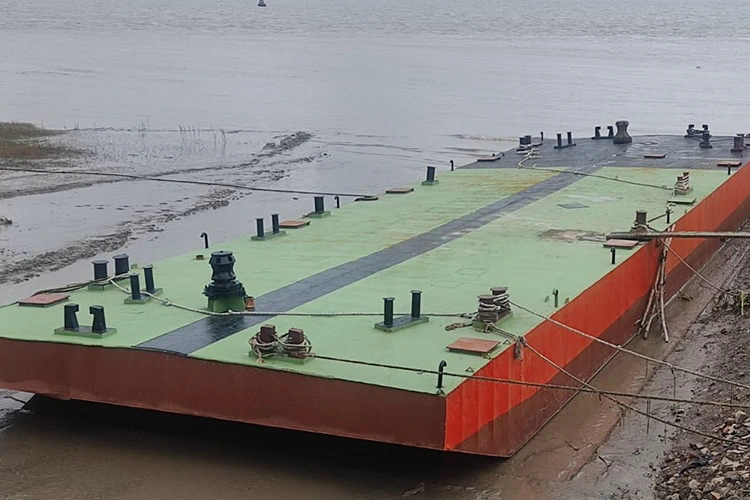
A pontoon barge is a flat-deck floating platform designed to transport heavy cargo, support construction operations, or provide stable working surfaces on water. Compared with traditional marine vessels, pontoon barges offer greater adaptability, easier transportation, lower maintenance costs, and scalable modular structures.
In this guide, you will learn how pontoon barges operate, what industries use them, the key technical advantages they provide, common customer concerns, and important purchasing considerations for long-term marine performance.
Table of Contents
What Is a Pontoon Barge?
A pontoon barge is a floating structure composed of modular pontoons or steel floating units connected together to form a stable platform on water. These barges are commonly used in marine engineering projects because they provide strong buoyancy and exceptional load-bearing capacity.
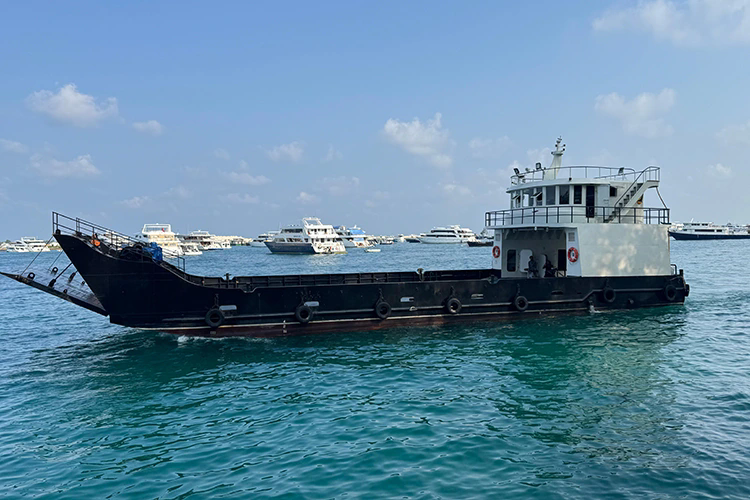
Unlike self-propelled vessels, most pontoon barges are towed or pushed by tugboats. Their flat deck design allows operators to transport heavy equipment, construction materials, containers, cranes, pipelines, and oversized cargo safely across rivers, ports, lakes, and offshore environments.
Modular Design Pontoon barges can be assembled into different sizes depending on project requirements.
High Stability Wide deck structures improve balance during loading and offshore operations.
Flexible Deployment Suitable for inland waterways, ports, shallow water, and offshore projects.
How Does a Pontoon Barge Work?
Pontoon barges rely on buoyancy generated by sealed floating chambers. When placed in water, the displacement force supports the total weight of the barge, cargo, and onboard equipment.
The modular pontoons are engineered to distribute weight evenly across the platform, minimizing instability and improving operational safety. Depending on the project, operators can add or remove pontoon sections to increase deck space or load capacity.
| Component | Function |
|---|---|
| Steel Pontoon Modules | Provide buoyancy and structural support |
| Deck Platform | Supports cargo, cranes, machinery, and workers |
| Connection System | Joins modular units securely for stability |
| Towing Equipment | Allows transportation by tugboats |
| Anchoring System | Maintains positioning during marine operations |
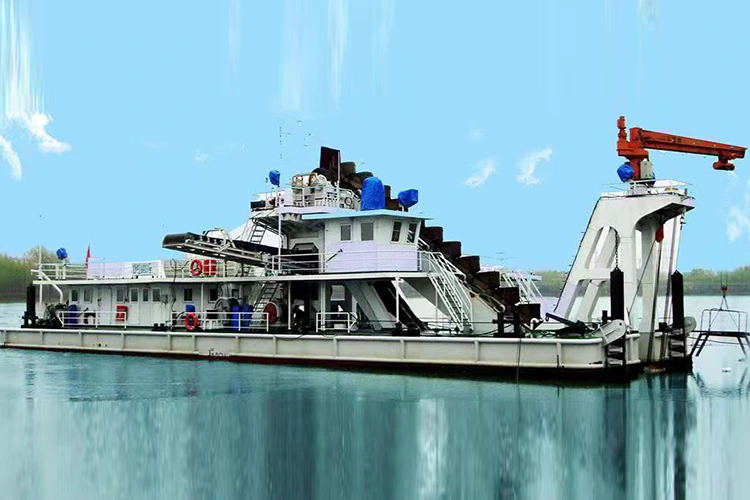
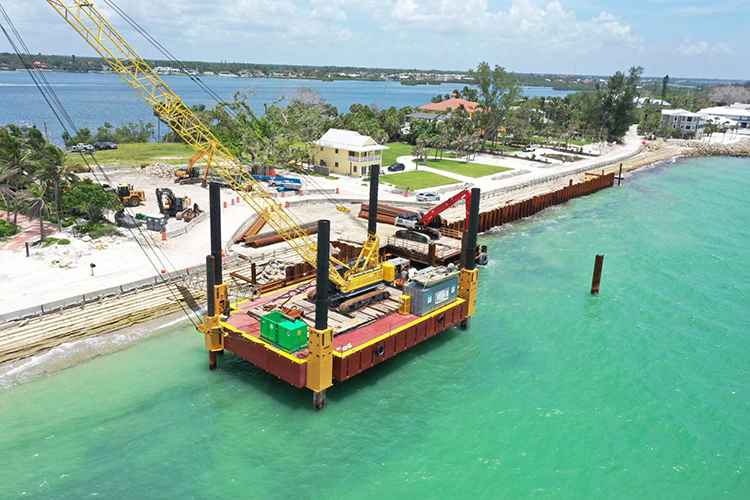
In dredging and offshore construction projects, pontoon barges often function as floating workstations that support excavators, cranes, pipelines, and generators.
Main Applications of Pontoon Barges
Pontoon barges are widely used across different marine and industrial sectors because of their versatility and durability.
- Marine construction projects
- Dredging operations
- Bridge construction support
- Offshore engineering platforms
- Heavy equipment transportation
- Floating crane support systems
- Temporary floating docks
- Pipeline installation projects
- Port and harbor maintenance
- Emergency rescue and flood control operations
Industries prefer pontoon barges because they can be customized for specific water depths, payload requirements, and operational conditions.
Key Advantages of Pontoon Barges
One of the biggest customer concerns in marine operations is achieving operational efficiency while reducing transportation and maintenance costs. Pontoon barges address these challenges effectively.
| Advantage | Benefit to Customers |
|---|---|
| Modular Configuration | Easy transportation and flexible assembly |
| High Load Capacity | Supports heavy machinery and oversized cargo |
| Excellent Stability | Improves worker safety during operations |
| Low Maintenance | Reduces long-term operating expenses |
| Adaptability | Suitable for rivers, lakes, ports, and offshore areas |
| Custom Manufacturing | Designed according to project requirements |
Compared with fixed marine platforms, pontoon barges offer greater mobility and project flexibility. This significantly reduces project downtime and improves construction efficiency.
Pontoon Barge vs Traditional Barges
Many customers struggle to decide between conventional barges and modular pontoon barges. The choice depends on operational objectives, transportation requirements, and environmental conditions.
| Feature | Pontoon Barge | Traditional Barge |
|---|---|---|
| Structure | Modular and customizable | Fixed structure |
| Transportation | Easier to transport in sections | Requires full vessel transport |
| Flexibility | Highly adaptable | Limited flexibility |
| Maintenance | Lower maintenance complexity | Higher maintenance demands |
| Deployment Speed | Fast assembly and deployment | Longer preparation time |
How to Choose the Right Pontoon Barge
Selecting the right pontoon barge requires careful analysis of operational needs, water conditions, and payload requirements.
- Determine the maximum load capacity required
- Evaluate operating water depth and wave conditions
- Consider deck dimensions for machinery placement
- Check corrosion resistance for offshore applications
- Review modular expansion possibilities
- Assess towing and transportation logistics
- Confirm compliance with marine safety standards
Working with an experienced manufacturer is essential to ensure structural integrity and long-term durability. Companies with advanced shipbuilding expertise can customize pontoon barges for specific engineering requirements.
You can explore customized modular pontoon solutions here:
Pontoon Barge Product Page
Maintenance Tips for Long Service Life
Proper maintenance directly affects operational safety and lifecycle costs. Even though pontoon barges are durable, regular inspections remain critical.
- Inspect welding seams regularly for cracks or corrosion
- Apply anti-corrosion coatings for saltwater operations
- Check buoyancy chambers for leakage
- Monitor deck deformation under heavy loads
- Maintain towing and anchoring systems properly
- Clean marine growth from hull surfaces periodically
Preventive maintenance minimizes downtime and extends the service life of the equipment significantly.
Why Manufacturer Experience Matters
Marine engineering projects often involve complex environmental conditions, heavy payloads, and strict safety standards. Choosing an experienced manufacturer ensures better structural design, material selection, and production quality.
Shandong Haiding Shipbuilding Co., Ltd. specializes in the manufacturing of modular barges, pontoon barges, floating platforms, and customized marine engineering equipment. The company focuses on delivering reliable floating solutions that meet the operational needs of construction contractors, port authorities, dredging companies, and offshore engineering projects.
With professional engineering support and customizable production capabilities, experienced manufacturers can help customers improve operational efficiency while reducing long-term maintenance risks.
FAQ
What materials are commonly used for pontoon barges?
Most pontoon barges are constructed from high-strength marine-grade steel because it offers excellent durability, corrosion resistance, and load-bearing performance.
Can pontoon barges be customized?
Yes. Modular pontoon barges can be customized in terms of deck size, load capacity, pontoon quantity, and onboard equipment configurations.
Are pontoon barges suitable for offshore projects?
Yes. Many pontoon barges are specifically engineered for offshore environments and can operate under demanding marine conditions when equipped with proper stabilization and anchoring systems.
How long does a pontoon barge typically last?
With proper maintenance and corrosion protection, a high-quality pontoon barge can maintain reliable performance for decades.
What industries benefit most from pontoon barges?
Marine construction, dredging, offshore engineering, transportation, bridge construction, and port maintenance industries commonly use pontoon barges.
Looking for Reliable Pontoon Barge Solutions?
Whether you need modular floating platforms, heavy-duty transportation barges, or customized marine engineering equipment, Shandong Haiding Shipbuilding Co., Ltd. can provide professional support tailored to your project requirements.
Our experienced engineering team is ready to help you select the ideal pontoon barge configuration for maximum operational efficiency, safety, and durability.
Contact us today to discuss your marine project requirements and receive customized pontoon barge solutions designed for long-term performance.
Contact UsRelated News
- How Can a Controllable Pitch Propeller Tug Improve Towing Efficiency and Port Maneuverability
- How Can a Jack Up Living Quarter Platform Improve Safety and Efficiency in Offshore Operations
- How Can a Rapidly Emplaced Bridge Transform Emergency Water-Crossing and Infrastructure Recovery
- How Can a Jack Up Wind Farm Installation Platform Transform Offshore Wind Turbine Installation
- How Can Modular Pontoons Transform Modern Marine Construction and Floating Platform Projects
- How Does an Ocean-Going Tug Support Demanding Deep-Sea Operations?
Leave me a message