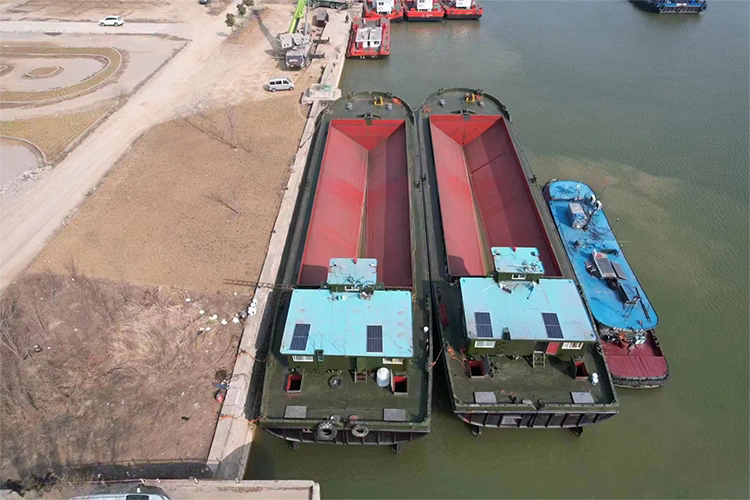
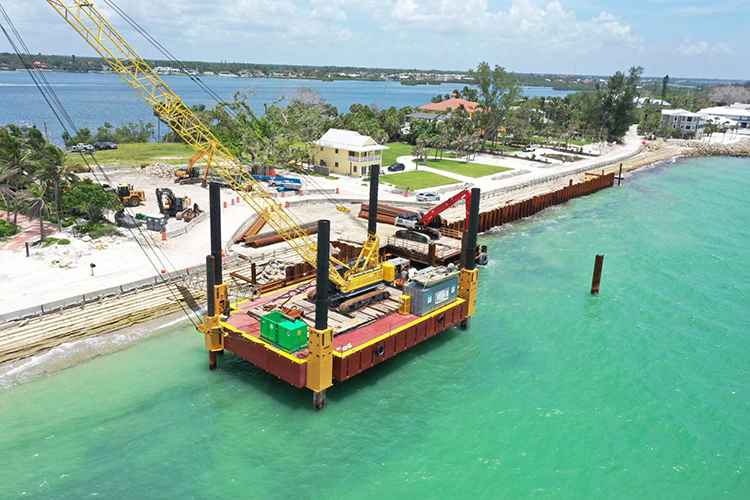
When offshore wind projects demand heavy lifting, precise turbine alignment, and reliable operation in challenging marine environments, the Jack Up Wind Farm Installation Platform from HAIDING SHIPYARD provides a purpose-built solution. Designed for large offshore turbines of 16MW and above, this heavy-duty installation platform combines an 800-ton-class slewing crane, automatic hydraulic leveling, modular transportation, and robust marine construction to support efficient wind farm installation from shallow to deep water.
As offshore wind turbines continue to increase in size and capacity, installation contractors need platforms capable of handling heavier nacelles, taller towers, larger components, and increasingly demanding marine conditions. A Jack Up Wind Farm Installation Platform addresses these challenges by elevating its working deck above the sea surface on spud legs, creating a stable working environment for heavy lifting and precision assembly.
The HAIDING SHIPYARD solution is designed for approximately 3–100 meters of water depth, with spud leg lengths of up to 150 meters, a total platform load capacity of up to 3,000 tons, and an integrated 800-ton 360° slewing crane. Its automatic hydraulic leveling system can achieve approximately ±0.05° leveling accuracy, while modular construction allows major components to be transported and assembled close to project sites.
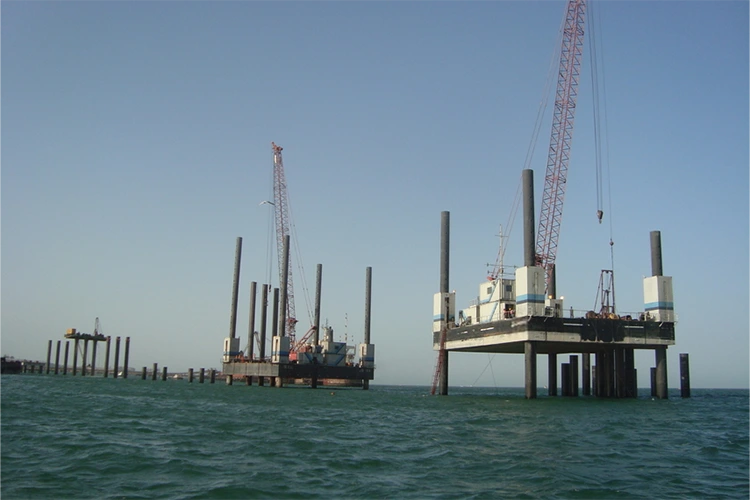
Table of Contents
- Why Is Offshore Wind Installation Becoming More Challenging?
- What Is a Jack Up Wind Farm Installation Platform?
- What Are the Key Features of the Platform?
- What Are the Main Technical Parameters?
- Why Choose a Jack Up Platform Instead of a Floating Crane?
- Where Can the Platform Be Used?
- How Does Modular Construction Improve Project Logistics?
- How Does the Platform Improve Offshore Lifting Safety?
- What Should Buyers Consider Before Choosing a Platform?
- Frequently Asked Questions
- Conclusion
Why Is Offshore Wind Installation Becoming More Challenging?
The rapid development of offshore wind energy has introduced a new generation of turbines with significantly higher generating capacity. Larger turbines require heavier nacelles, longer blades, taller towers, and more demanding installation procedures.
Traditional offshore installation methods can become increasingly difficult when wave-induced vessel movement affects lifting accuracy. During a heavy lift, even relatively small deck movements can complicate tower section alignment, nacelle positioning, foundation work, and component handling.
This is where a self-elevating installation platform offers a major engineering advantage. Instead of continuously performing heavy lifts from a floating deck, the platform can position itself at the worksite, deploy its spud legs, elevate the hull above the water, and establish a comparatively stable working environment.
- Reduced influence from wave-induced vessel motion during lifting
- Improved working stability for large turbine components
- Greater lifting capacity for next-generation turbines
- Precise platform leveling for turbine assembly
- Adaptability to different offshore water depths
What Is a Jack Up Wind Farm Installation Platform?
A Jack Up Wind Farm Installation Platform is a specialized offshore construction platform designed to support wind turbine installation, foundation-related operations, heavy lifting, and selected offshore maintenance activities.
Unlike a conventional floating vessel, the platform uses vertically movable spud legs to establish a stable connection with the seabed. Hydraulic lifting equipment raises the working deck above the water surface after positioning. This configuration allows heavy lifting operations to take place from a more stable working base.
For large-scale offshore wind projects, the platform can integrate several critical systems into one working unit, including:
- Heavy-duty 360° slewing crane
- Hydraulic platform leveling system
- Spud leg and jacking system
- Wind turbine component handling equipment
- Foundation leveling and grouting support equipment
- Real-time load and positioning monitoring systems
- Emergency power and lifting systems
What Are the Key Features of the Platform?
1. 800-Ton-Class Heavy Lifting Capability
The integrated 360° slewing crane is designed for demanding offshore lifting operations, with a rated capacity of up to 800 tons and a maximum working radius of approximately 45 meters. The main hook lifting height can reach at least 120 meters, while the auxiliary hook can reach at least 150 meters.
This configuration makes the platform suitable for handling large turbine components, including nacelles with weights of up to approximately 600 tons and individual tower sections weighing up to approximately 300 tons.
2. Automatic Hydraulic Leveling
Precision is essential when connecting major wind turbine components. The integrated hydraulic leveling system is designed to automatically maintain platform alignment, with a stated leveling accuracy of approximately ±0.05°.
This helps create a more controlled working environment for tower installation, nacelle lifting, foundation operations, and other precision-sensitive procedures.
3. Heavy-Duty Marine Steel Construction
The main structure uses CCSB marine steel plate, while the deck can incorporate wear-resistant modified marine steel. The main load-bearing beam thickness is specified at no less than 60 mm, with a yield strength of at least 235 MPa.
4. Modular and Transportable Design
The platform can be divided into multiple transportable sections. This approach can simplify transportation to regions where conventional large-scale shipbuilding infrastructure or deep-water construction facilities may be limited.
5. Real-Time Monitoring and Emergency Systems
Offshore heavy lifting requires continuous monitoring. The platform incorporates monitoring functions for platform level, lifting load, wind speed, and positioning. An emergency generator, manual lifting equipment, and crane anti-fall protection provide additional operational safeguards.
What Are the Main Technical Parameters?
The following table summarizes key specifications associated with the HAIDING SHIPYARD Jack Up Wind Farm Installation Platform.
| Parameter Category | Technical Parameter | Specification |
|---|---|---|
| Platform Dimensions | Total Length | Approximately 80–100 m |
| Platform Dimensions | Total Width | Approximately 30–35 m |
| Platform Depth | Structural Depth | Approximately 7.0–8.0 m |
| Spud Legs | Quantity / Type | 4 / Truss type |
| Spud Legs | Leg Length | 50–150 m |
| Water Depth | Applicable Range | Approximately 3–100 m |
| Crane | Rated Capacity | Up to 800 tons |
| Crane | Working Radius | Up to approximately 45 m |
| Crane | Main Hook Height | ≥120 m |
| Crane | Auxiliary Hook Height | ≥150 m |
| Platform Load | Total Load Capacity | Up to 3,000 tons |
| Leveling | Automatic Leveling Accuracy | Approximately ±0.05° |
| Materials | Main Structural Steel | CCSB marine steel plate |
| Safety | Emergency Generator | 500 kW |
| Corrosion Protection | Underwater Protection | Heavy-duty coating + cathodic protection |
| Certification | Applicable Classification | ABS / CCS / DNV marine platform certification |
Note: Actual platform configuration, lifting capacity, leg length, dimensions, and certification requirements should be confirmed according to the specific wind farm project, turbine model, seabed conditions, and applicable marine regulations.
Why Choose a Jack Up Platform Instead of a Floating Crane?
Floating crane vessels provide excellent mobility, but their floating nature means that deck movement can be influenced by waves, wind, and current. For large turbine components, this movement can increase the complexity of precision lifting operations.
A jack-up configuration provides a different operating principle. Once the platform is positioned and elevated, the working deck is supported through its spud legs rather than continuously floating on the sea surface.
| Consideration | Jack-Up Installation Platform | Conventional Floating Crane |
|---|---|---|
| Working Stability | High stability after jacking | Subject to vessel motion |
| Heavy Component Lifting | Designed for large turbine components | Depends heavily on vessel specification |
| Platform Leveling | Hydraulic leveling system | Dynamic compensation may be required |
| Large Turbine Installation | Well suited to fixed-position heavy lifting | Potentially more sensitive to sea conditions |
| Mobility | Requires relocation and jacking procedures | Generally highly mobile |
The best solution ultimately depends on project depth, seabed conditions, turbine specifications, installation schedule, weather window, transportation infrastructure, and overall project economics.
Where Can the Platform Be Used?
A modern Jack Up Wind Farm Installation Platform can support multiple stages of offshore wind development rather than being limited to one lifting task.
Offshore Wind Turbine Installation
The platform can support tower section installation, nacelle lifting, turbine component positioning, and other heavy lifting operations associated with large offshore turbines.
Foundation Leveling and Grouting
After foundation or pile installation, stable deck space can support leveling, grouting, equipment handling, and associated construction work.
Offshore Wind Farm Maintenance
In suitable project configurations, the platform can function as a temporary offshore support base for maintenance tools, consumables, spare components, and material transfer operations.
Large-Capacity Offshore Wind Projects
With configurations designed for turbines of 16MW and above, the platform is particularly relevant to next-generation offshore wind farms where conventional lifting solutions may face capacity or stability limitations.
How Does Modular Construction Improve Project Logistics?
One important advantage of modular construction is that a large offshore installation platform does not necessarily need to be manufactured and transported as one enormous structure.
The platform can be divided into multiple sections, including the main platform structure, spud leg sections, and crane module. According to the referenced design, the platform can consist of approximately 7–9 major sections, with individual sections designed for practical transportation and assembly.
- Road transportation: Suitable sections can be transported to inland assembly locations.
- Rail logistics: Modular components may be integrated into suitable multimodal transportation plans.
- Marine transportation: Larger sections can be moved by barges or heavy-lift vessels.
- On-site assembly: Modular sections can be connected close to the project location.
- Global project deployment: The approach can help serve offshore projects in regions with different port infrastructure conditions.
This modular philosophy can be especially valuable for international wind farm developers, EPC contractors, marine construction companies, and offshore installation service providers.
How Does the Platform Improve Offshore Lifting Safety?
Safety is one of the most important considerations when lifting hundreds of tons of equipment offshore. The platform therefore combines structural engineering, hydraulic control, monitoring technology, and emergency systems.
- Automatic leveling: Hydraulic systems help maintain the required platform attitude.
- Load monitoring: Sensors can monitor lifting loads and provide operational warnings.
- Position monitoring: Positioning systems help operators understand the platform's location during offshore work.
- Wind monitoring: Wind-speed information supports operational decision-making.
- Emergency power: A 500 kW emergency generator provides backup power capability.
- Crane protection: Anti-fall and wind-locking systems provide additional safeguards during lifting and standby operations.
For offshore projects, these features should always be integrated into a broader marine safety management system, lifting plan, weather monitoring process, and project-specific risk assessment.
What Should Buyers Consider Before Choosing a Platform?
Purchasing a Jack Up Wind Farm Installation Platform is a major engineering decision. Buyers should evaluate the complete project rather than focusing only on crane capacity.
- Water depth: Confirm that the spud leg configuration matches the actual operating depth.
- Seabed conditions: Analyze soil strength, penetration requirements, and foundation stability.
- Turbine specifications: Check nacelle weight, tower section weight, hub height, and turbine capacity.
- Crane performance: Evaluate rated load, working radius, lifting height, and synchronization accuracy.
- Deck capacity: Confirm that equipment, personnel, materials, and crane loads remain within structural limits.
- Transportation: Consider port access, road restrictions, marine transportation, and assembly requirements.
- Classification: Determine whether ABS, CCS, DNV, or another classification framework is required.
- Corrosion protection: Review coating systems and cathodic protection for long-term offshore service.
- After-sales engineering: Check whether the manufacturer provides installation planning, commissioning, technical support, and maintenance assistance.
For international buyers looking for a China manufacturer or China supplier, it is also important to assess manufacturing capability, engineering experience, quality control, documentation, certification support, transportation planning, and customization capacity before placing an order.
Frequently Asked Questions
1. What is a Jack Up Wind Farm Installation Platform used for?
It is primarily used for offshore wind turbine construction and heavy lifting, including foundation-related operations, tower installation, nacelle lifting, component handling, and selected offshore wind farm maintenance activities.
2. What water depth can this platform operate in?
The referenced HAIDING SHIPYARD configuration is designed for approximately 3–100 meters of water depth, with spud leg lengths of approximately 50–150 meters. Final specifications should be customized according to actual site conditions.
3. What turbine capacity can the platform support?
The platform is designed with next-generation offshore turbines in mind, including 16MW and above configurations. The referenced design accommodates main engine weights of up to approximately 600 tons.
4. How much can the integrated crane lift?
The integrated 360° slewing crane has a rated lifting capacity of up to approximately 800 tons, subject to working radius, configuration, operating conditions, and project-specific engineering requirements.
5. Why is automatic leveling important?
Precise leveling helps create a stable working surface for heavy lifting and turbine component alignment. The referenced platform provides an automatic hydraulic leveling accuracy of approximately ±0.05°.
6. Can the platform be customized?
Yes. Platform dimensions, spud leg length, crane configuration, lifting capacity, deck arrangement, and other technical parameters can be engineered according to water depth, turbine size, seabed conditions, and project requirements.
Conclusion
The rapid growth of offshore wind is creating demand for installation equipment that can safely handle larger turbines while maintaining precision and operational efficiency. A Jack Up Wind Farm Installation Platform provides a stable alternative to conventional floating lifting solutions by elevating the working deck above the water and integrating heavy lifting, hydraulic leveling, monitoring, and modular transportation capabilities into one specialized system.
For developers, EPC contractors, offshore construction companies, and international buyers evaluating a China manufacturer or supplier, HAIDING SHIPYARD offers a platform concept engineered around heavy-duty offshore wind installation requirements, including 800-ton-class lifting capability, 3,000-ton total platform load capacity, 50–150 meter spud legs, and operation across approximately 3–100 meters of water depth. If you are planning an offshore wind installation project and need a customized platform configuration, technical consultation, transportation solution, or project-specific engineering support, contact us today to discuss your requirements with HAIDING SHIPYARD and develop a practical offshore installation solution for your next wind farm project.