How Does an Ocean-Going Tug Support Demanding Deep-Sea Operations?
Article Summary: An Ocean-Going Tug is more than a powerful towing vessel. It is a specialized marine platform designed to move, escort, support, rescue, and protect large assets across demanding offshore environments. Long-distance towing, unpredictable weather, high wave loads, saltwater corrosion, limited refueling opportunities, precise maneuvering, and emergency response all place exceptional demands on tugboat design. This article explains the key technologies, performance factors, operating considerations, and customization options that determine whether an Ocean-Going Tug can perform reliably on extended maritime missions. It also examines how HAIDING SHIPYARD approaches power configuration, hull strength, propulsion, dynamic positioning, endurance, and specialized equipment to address practical challenges faced by offshore operators.
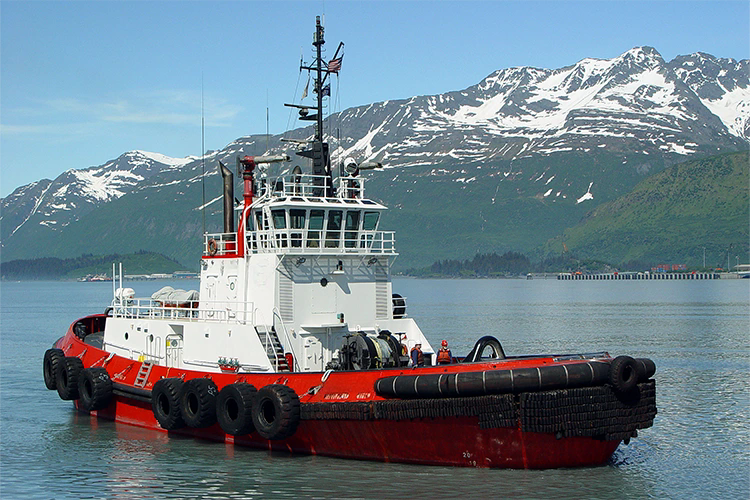
Table of Contents
- Article Outline
- What Is an Ocean-Going Tug?
- What Challenges Must an Ocean-Going Tug Overcome?
- How Does Propulsion Power Affect Towing Performance?
- How Can an Ocean-Going Tug Achieve Long Operating Range?
- How Does Hull Design Improve Offshore Reliability?
- How Does Maneuverability Improve Deep-Sea Operations?
- What Specialized Equipment Can Be Added?
- How Should Buyers Select the Right Ocean-Going Tug?
- Key Performance Factors at a Glance
- How Can Operators Reduce Downtime?
- Why Consider HAIDING SHIPYARD?
- Frequently Asked Questions
- Conclusion
Article Outline
- Define the role and operating environment of an Ocean-Going Tug.
- Identify the main technical challenges associated with long-distance offshore operations.
- Explain the relationship between engine power, bollard pull, propulsion, and towing capability.
- Discuss fuel capacity, endurance, hull construction, corrosion protection, and crew requirements.
- Explain the value of dynamic positioning and advanced maneuvering systems.
- Review optional equipment for towing, firefighting, rescue, offshore engineering, and environmental response.
- Provide a practical framework for selecting an Ocean-Going Tug for different missions.
- Answer common questions from buyers, shipowners, offshore contractors, and marine operators.
What Is an Ocean-Going Tug?
An Ocean-Going Tug is a purpose-built workboat engineered for operations beyond sheltered coastal and harbor waters. Unlike a conventional harbor tug that may spend most of its working life assisting ships in confined port areas, an ocean-going model must remain dependable during extended voyages and challenging sea conditions.
Its missions can include towing disabled vessels, transporting large floating structures, supporting offshore construction, escorting specialized vessels, assisting floating production units, supporting drilling operations, recovering marine equipment, and responding to maritime emergencies.
The vessel therefore needs a carefully balanced combination of propulsion power, towing capability, fuel endurance, hull strength, navigation equipment, crew accommodation, safety systems, and maneuverability. A tug that performs well inside a protected harbor is not automatically suitable for a transoceanic assignment.
For offshore operators, the central question is not simply how much horsepower a tug has. The more important question is whether the complete vessel configuration can deliver dependable performance throughout the planned mission.
What Challenges Must an Ocean-Going Tug Overcome?
Long-distance marine operations expose vessels to conditions that can quickly reveal weaknesses in design, equipment selection, and maintenance planning. A reliable Ocean-Going Tug must be prepared for several interacting challenges.
- Heavy sea states: Large waves create repeated impact loads and significant stresses on the hull and towing equipment.
- Saltwater corrosion: Continuous exposure to seawater and salt spray can accelerate corrosion of steel structures, piping, electrical connections, and deck equipment.
- Long distances: Offshore missions may take days or weeks, making fuel capacity, freshwater storage, spare parts, and onboard reliability critical.
- Heavy towing loads: Towing large vessels or floating structures requires substantial bollard pull and robust towing gear.
- Limited external support: Mechanical failures far from shore can create major schedule, safety, and financial consequences.
- Restricted maneuvering space: Offshore platforms, construction sites, ice channels, and congested waters require precise control.
- Extreme temperatures: Polar and sub-polar operations can place additional demands on engines, hydraulic systems, fuel systems, and hull structures.
These challenges demonstrate why an Ocean-Going Tug should be treated as an integrated engineering system rather than simply a larger version of a harbor tug.
How Does Propulsion Power Affect Towing Performance?
Propulsion power directly influences the tug's ability to generate thrust, maintain speed, maneuver under load, and perform towing operations. However, maximum engine horsepower should never be considered in isolation.
The actual towing capability depends on the interaction of engine output, propeller or thruster design, hull form, gearbox efficiency, displacement, draft, and towing equipment. Bollard pull is particularly important because it indicates the static pulling force available when the tug is working against a heavy load.
For example, an offshore towing mission may involve a large floating structure with considerable hydrodynamic resistance. The tug must generate enough sustained thrust to maintain control rather than simply produce a short burst of power.
HAIDING SHIPYARD's Ocean-Going Tug range is designed around different power configurations to address different operational requirements. Its product information describes configurations ranging from approximately 5,000 to 16,000 HP, with bollard-pull options designed for demanding towing applications.
When selecting propulsion power, buyers should therefore evaluate:
- Required bollard pull.
- Towed-object displacement and resistance.
- Expected sea conditions.
- Required cruising speed.
- Distance between operational bases.
- Fuel consumption at different load conditions.
- Availability of engine and propulsion-system support.
- Future changes in mission requirements.
Choosing a power system that is too small can compromise operational capability, while excessive power may increase acquisition and fuel costs without providing meaningful benefits for the intended mission.
How Can an Ocean-Going Tug Achieve Long Operating Range?
Range is one of the most important considerations when a tug must operate far from port. A vessel can have excellent towing power but still become commercially impractical if it requires frequent refueling.
Long-range capability begins with fuel-tank capacity but does not end there. Fuel consumption is affected by engine loading, hull resistance, weather, towing speed, propeller efficiency, vessel displacement, and operational strategy.
A well-designed Ocean-Going Tug should balance fuel storage with usable deck and machinery space. Oversized tanks can add weight, while insufficient capacity may force unnecessary stops during long-distance assignments.
Operators should also consider freshwater storage, provisions, lubricants, spare parts, and crew endurance. A genuine long-range mission requires the vessel to sustain the entire operation, not merely keep its engines running.
According to HAIDING SHIPYARD's product information, selected Ocean-Going Tug configurations are designed for extended voyages, with large-capacity fuel systems supporting ranges exceeding 3,500 nautical miles under stated operating conditions.
For buyers, the most useful approach is to request a mission-specific endurance calculation rather than relying solely on a headline range figure.
How Does Hull Design Improve Offshore Reliability?
The hull is the foundation of an Ocean-Going Tug's offshore performance. It must withstand continuous wave loading, vibration, torsional forces, towing loads, impacts, and environmental exposure.
High-strength marine steel can provide the structural foundation required for demanding operations, while reinforced areas around the bow, stern, towing points, machinery foundations, and deck equipment can help manage concentrated loads.
Double-hull and double-bottom arrangements can also provide additional structural and operational benefits when appropriately engineered for the vessel's intended application. Corrosion-control measures are equally important because saltwater exposure is unavoidable during ocean operations.
A comprehensive corrosion-management strategy may include:
- Marine-grade protective coating systems.
- Careful surface preparation before coating.
- Corrosion-resistant materials in selected components.
- Cathodic protection where appropriate.
- Drainage and ventilation arrangements that reduce moisture accumulation.
- Routine inspection of exposed structures.
- Scheduled coating maintenance.
For cold-region operations, additional structural reinforcement may be necessary. Ice-strengthened hull sections, appropriate machinery protection, heating arrangements, and low-temperature starting systems can become important depending on the navigation area.
HAIDING SHIPYARD states that certain configurations can be adapted for seasonal ice operations and can incorporate reinforced ice-belt structures and other cold-environment modifications.
How Does Maneuverability Improve Deep-Sea Operations?
High towing power is valuable, but power without control can create operational risk. Offshore towing often requires a tug to maintain a specific heading, adjust position relative to a floating structure, or operate safely near other vessels and installations.
Modern propulsion arrangements can significantly improve low-speed control. Azimuth propulsion, advanced hydraulic controls, and integrated steering systems can allow the operator to direct thrust efficiently in different directions.
Dynamic positioning can further improve control during specialized offshore tasks. A DP system continuously evaluates vessel position and heading and automatically adjusts propulsion and steering inputs to maintain the desired operating position.
For offshore construction and support work, this can be particularly useful when the tug must remain close to a platform, construction vessel, subsea operation, or other floating asset.
HAIDING SHIPYARD's product information identifies DP2/DP3 dynamic positioning configurations for selected Ocean-Going Tug applications.
However, buyers should evaluate the complete positioning system rather than focusing only on the DP class. Sensors, control architecture, thrusters, power redundancy, operator training, and maintenance all contribute to real-world performance.
What Specialized Equipment Can Be Added?
Ocean-going tug missions vary substantially. A vessel intended for emergency response may require a different configuration from one dedicated to offshore construction or long-distance towing.
Common equipment options can include:
- Firefighting systems: Useful for emergency response, vessel assistance, and offshore asset protection.
- Oil-spill recovery equipment: Supports environmental response and marine pollution-control operations.
- ROV support modules: Can help integrate remotely operated underwater inspection or intervention tasks.
- Enhanced towing equipment: Heavy-duty winches, towing hooks, fairleads, and related deck systems can be configured around the expected load.
- Additional fuel tanks: Useful for extended missions where refueling infrastructure is limited.
- Freshwater reserves: Important for longer crewed voyages.
- Ice reinforcement: Suitable for selected seasonal or polar operations.
- Low-temperature systems: May improve reliability in cold-weather environments.
HAIDING SHIPYARD describes customization options that can include firefighting, oil-spill recovery, ROV-related equipment, additional tank capacity, and modifications for colder operating environments.
The advantage of customization is that operators can avoid paying for unnecessary equipment while ensuring that mission-critical capabilities are integrated from the beginning.
How Should Buyers Select the Right Ocean-Going Tug?
Selecting an Ocean-Going Tug should begin with the mission rather than the vessel brochure. Buyers should define exactly what the tug will do, where it will operate, how long each voyage will last, and what loads it must handle.
- Define the primary mission. Determine whether the vessel will perform towing, escorting, offshore construction support, rescue, firefighting, transportation support, or multiple functions.
- Calculate towing requirements. Identify the displacement, dimensions, windage, underwater resistance, and expected environmental conditions of the assets to be towed.
- Determine the required range. Consider the complete route, reserve requirements, weather deviations, and availability of refueling ports.
- Assess navigation conditions. Determine whether the vessel will operate in open ocean, coastal waters, seasonal ice, or polar environments.
- Review propulsion redundancy. Critical offshore missions benefit from carefully engineered redundancy and maintainability.
- Evaluate deck equipment. The towing winch, hooks, fairleads, cranes, firefighting equipment, and other systems should match the intended work.
- Check certification requirements. Determine which classification society and flag-state requirements apply to the intended operating area and mission.
- Plan lifecycle support. Spare parts, technical assistance, crew training, commissioning, and maintenance support should be considered before purchase.
A technically impressive vessel may still be a poor investment if its configuration does not match the operator's actual working profile.
Key Performance Factors at a Glance
| Factor | Why It Matters | What Buyers Should Check |
|---|---|---|
| Engine Power | Provides propulsion and towing force | Rated output, redundancy, fuel consumption, serviceability |
| Bollard Pull | Indicates static towing capability | Required pull for the intended towing loads |
| Range | Determines operational independence from refueling ports | Fuel capacity, consumption, reserve requirements, route distance |
| Hull Strength | Supports safe operation in demanding sea conditions | Structural design, reinforcement, steel grade, inspection access |
| Corrosion Protection | Reduces degradation from seawater and salt spray | Coatings, cathodic protection, maintenance procedures |
| Maneuverability | Improves control during towing and offshore support | Propulsion type, thrusters, steering, control system |
| Dynamic Positioning | Supports precise station keeping | DP capability, redundancy, sensors, power architecture |
| Special Equipment | Expands the vessel's working capabilities | Firefighting, rescue, oil recovery, ROV, crane and towing systems |
| After-Sales Support | Helps reduce downtime during the vessel's service life | Spare parts, technical response, commissioning and training |
How Can Operators Reduce Downtime?
Reliability begins during vessel design, but it must be maintained throughout the operating life of the tug. A preventive maintenance program is essential because a minor issue at sea can develop into a major operational problem when replacement parts or specialist technicians are unavailable.
Operators should establish inspection and maintenance schedules for the main engine, gearbox, propulsion units, generators, hydraulic systems, steering equipment, towing machinery, electrical systems, navigation equipment, and safety equipment.
Special attention should be given to systems exposed to seawater, vibration, heavy mechanical loading, and repeated temperature changes.
- Inspect hull and deck structures regularly.
- Monitor corrosion-prone areas.
- Maintain propulsion and steering systems according to manufacturer requirements.
- Inspect towing equipment for wear, deformation, and hydraulic problems.
- Test emergency and firefighting systems periodically.
- Maintain adequate inventories of critical spare parts.
- Keep maintenance records organized and traceable.
- Train crew members to recognize early signs of equipment deterioration.
Good maintenance is not simply a cost-control measure. It protects vessel availability, crew safety, cargo or offshore assets, and the profitability of each mission.
Why Consider HAIDING SHIPYARD?
HAIDING SHIPYARD focuses on customized marine engineering and provides Ocean-Going Tug solutions for demanding offshore applications. Its product information highlights experience with international marine projects, multiple classification certifications, extended-range configurations, high-power propulsion options, and specialized equipment for different operating scenarios.
One important advantage of working with an experienced shipyard is the ability to integrate multiple vessel systems during the design stage. Instead of selecting an engine, towing winch, hull, positioning system, and auxiliary equipment independently, operators can develop a coordinated vessel configuration around a defined mission profile.
This approach is particularly valuable when the tug must perform multiple roles. For example, a vessel may need to combine long-distance towing with emergency response, offshore construction support, or environmental protection. In such cases, deck layout, power distribution, tank capacity, accommodation, machinery arrangement, and specialized equipment must work together.
HAIDING SHIPYARD also describes after-sales support covering technical assistance, spare parts, installation and commissioning, operator training, and maintenance guidance.
For international operators, lifecycle support can be just as important as the initial vessel specification. A tug working thousands of nautical miles from its home port needs a supplier capable of supporting the vessel after delivery, not only building it.
Frequently Asked Questions
What is the main purpose of an Ocean-Going Tug?
An Ocean-Going Tug is designed for offshore and long-distance maritime tasks such as heavy towing, vessel assistance, offshore construction support, rescue operations, escort work, and support of floating assets. Its design emphasizes endurance, towing capability, structural strength, maneuverability, and reliability in open-water conditions.
How is an Ocean-Going Tug different from a harbor tug?
A harbor tug is generally optimized for short-distance operations in ports, terminals, and sheltered waters. An Ocean-Going Tug is designed for longer voyages and more severe environmental conditions. It normally requires greater endurance, stronger offshore capability, larger fuel and freshwater capacity, and equipment suited to extended operations.
Why is bollard pull important?
Bollard pull represents the pulling force a tug can generate under a static towing condition. It is an important reference when evaluating whether the vessel can handle a specific towing assignment. However, real-world towing performance also depends on sea conditions, hull characteristics, propulsion efficiency, towing equipment, and the characteristics of the object being towed.
Can an Ocean-Going Tug operate in polar waters?
Some Ocean-Going Tug configurations can be engineered for seasonal or polar operations. Depending on the operating area, buyers may require ice-class certification, reinforced hull sections, low-temperature machinery systems, heating arrangements, and specialized navigation equipment.
What is dynamic positioning used for?
Dynamic positioning helps a vessel automatically maintain a commanded position and heading using propulsion and steering systems. It can be valuable for offshore construction, platform support, subsea operations, and other tasks requiring accurate station keeping.
Can an Ocean-Going Tug be customized?
Yes. Customization may include engine power, fuel capacity, freshwater storage, towing equipment, firefighting systems, oil-spill recovery equipment, ROV support, ice reinforcement, low-temperature systems, accommodation arrangements, and positioning technology. The correct configuration should be determined by the vessel's intended mission.
How should I determine the required engine power?
Start with the required bollard pull, towing load, operating environment, towing speed, route length, and maneuvering requirements. The engine should then be matched with an appropriate propulsion system and hull configuration. A professional shipyard can perform a mission-specific assessment instead of relying on horsepower alone.
Why is corrosion protection important for ocean-going vessels?
Continuous exposure to seawater and salt spray can accelerate corrosion. Effective coatings, structural detailing, cathodic protection where appropriate, inspection, and maintenance can help preserve hull integrity and reduce lifecycle costs.
What should I ask a shipyard before ordering an Ocean-Going Tug?
Ask about towing performance, bollard pull, fuel consumption, range, classification, hull design, propulsion redundancy, dynamic positioning, specialized equipment, operating-temperature limits, maintenance requirements, spare-parts availability, commissioning, crew training, warranty terms, and long-term technical support.
Conclusion
An Ocean-Going Tug must perform reliably when conditions are unpredictable, distances are long, and the consequences of downtime are substantial. Successful vessel design therefore requires much more than installing a high-powered engine. Hull strength, towing capability, fuel endurance, propulsion efficiency, maneuverability, dynamic positioning, corrosion protection, safety systems, specialized equipment, and after-sales support all contribute to the vessel's overall value.
For shipowners and offshore contractors, the best purchasing decision begins with a clear understanding of the mission. Once the towing load, operating area, range, sea conditions, environmental requirements, and specialized functions are defined, the tug can be configured around real operational needs.
HAIDING SHIPYARD provides customized Ocean-Going Tug solutions designed around different offshore applications and operational requirements. If you are planning a new vessel, replacing an existing tug, or developing a specialized offshore project, contact us to discuss your requirements and find an Ocean-Going Tug configuration suited to your mission.
Related News
- How Can a Controllable Pitch Propeller Tug Improve Towing Efficiency and Port Maneuverability
- How Can a Jack Up Living Quarter Platform Improve Safety and Efficiency in Offshore Operations
- How Can a Rapidly Emplaced Bridge Transform Emergency Water-Crossing and Infrastructure Recovery
- How Can a Jack Up Wind Farm Installation Platform Transform Offshore Wind Turbine Installation
- How Can Modular Pontoons Transform Modern Marine Construction and Floating Platform Projects
- How Does a Sectional Dredger Improve Modern Dredging Operations?
Leave me a message