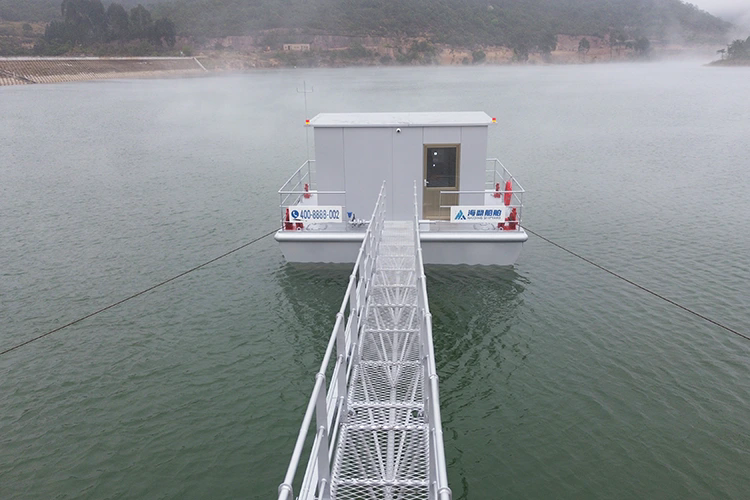
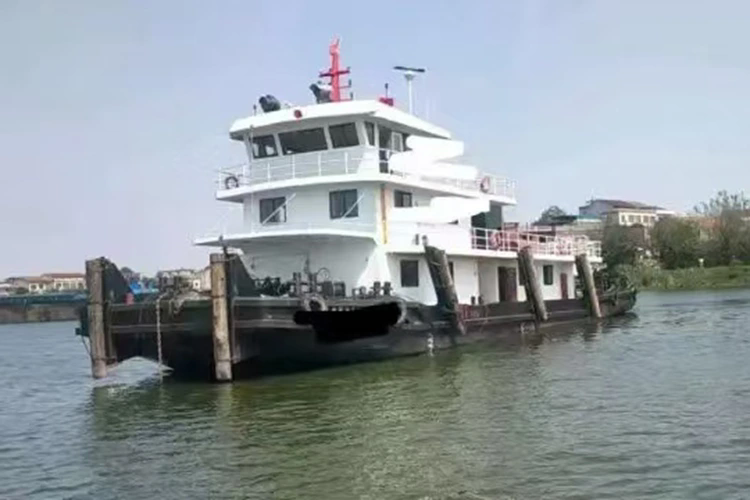
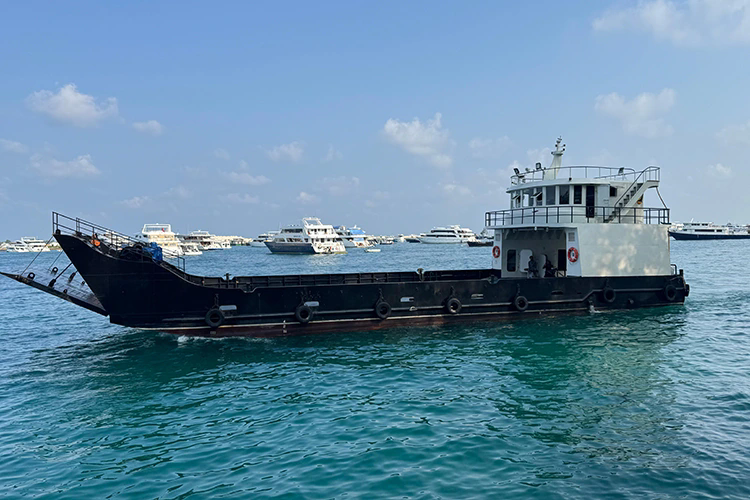
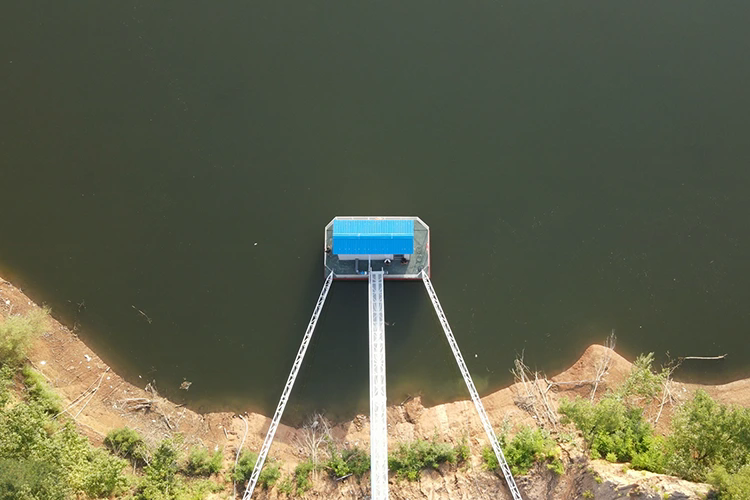
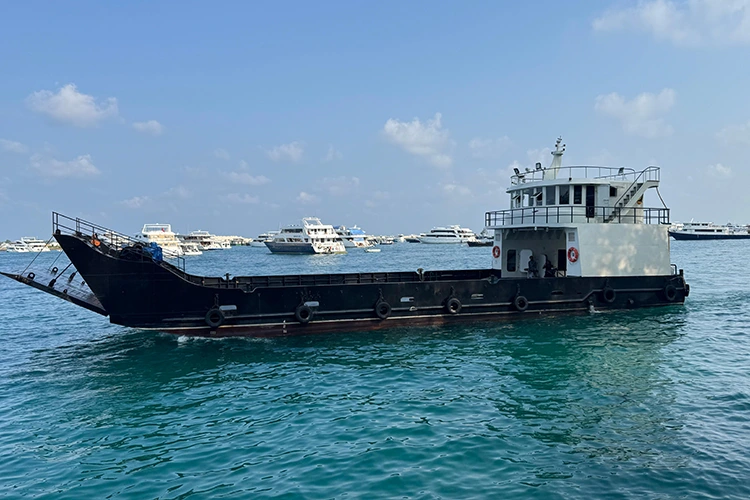
HAIDING SHIPYARD provides professionally engineered Modular Pontoons designed for flexible marine construction, temporary docks, equipment platforms, inland waterway projects, and offshore applications. With standardized modules, high-strength steel construction, flexible connections, and efficient transportation, these floating systems provide a practical alternative to conventional fixed-size floating structures.
Modular pontoons are changing how contractors, marine engineers, infrastructure developers, and project operators approach floating construction. Instead of transporting and deploying one large floating structure, modular pontoons divide the platform into manageable sections that can be transported, assembled, expanded, relocated, and reused according to project requirements.
Modern modular pontoon systems can combine standardized dimensions with different load capacities, making them suitable for everything from lightweight bridge maintenance platforms to heavy-duty equipment platforms. HAIDING SHIPYARD offers HD-H50, HD-S50, and HD-S70 series solutions designed to cover different load requirements while maintaining practical transportation and assembly characteristics.
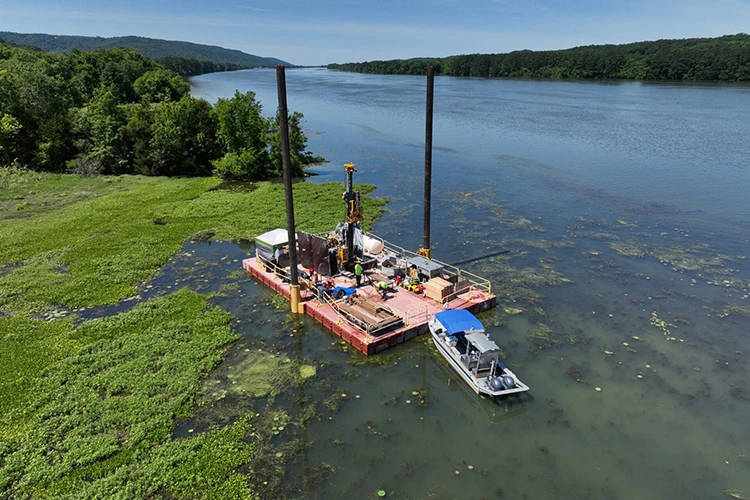
Table of Contents
- What Are Modular Pontoons?
- Why Are Modular Pontoons Becoming a Preferred Marine Solution?
- How Do Different Modular Pontoon Series Meet Different Load Requirements?
- What Technical Features Should Buyers Examine?
- Where Can Modular Pontoons Be Used?
- How Do Transportation and Assembly Improve Project Efficiency?
- How Should You Select the Right Modular Pontoons?
- Why Does the Manufacturer Matter?
- Frequently Asked Questions About Modular Pontoons
- Conclusion
What Are Modular Pontoons?
Modular pontoons are floating structural units designed to be connected together to form larger platforms, walkways, docks, workstations, equipment bases, and other floating structures. Unlike conventional integral pontoons, a modular system uses standardized individual sections that can be combined into different configurations.
This design approach provides greater flexibility when project dimensions, operating conditions, or equipment requirements change. Modules can be connected side-to-side, end-to-end, or through special configurations to create rectangular or customized platform layouts.
For marine contractors, this flexibility is particularly valuable because a single pontoon system may serve several projects throughout its service life. Instead of purchasing a completely new floating structure for every application, operators can reconfigure existing modules according to changing requirements.
Depending on the series and configuration, HAIDING SHIPYARD modular pontoons are designed for load requirements ranging from smaller floating platforms to heavy-duty applications. The system incorporates high-strength steel, reinforced connection structures, anti-slip deck treatment, and corrosion protection for demanding freshwater and marine environments.
Why Are Modular Pontoons Becoming a Preferred Marine Solution?
The main advantage of modular pontoons is not simply buoyancy. Their real value comes from combining buoyancy, structural strength, transportability, reusability, and configuration flexibility within one system.
- Flexible configuration: Modules can be combined into different platform shapes and dimensions.
- Efficient transportation: Smaller individual modules are easier to transport than large integral floating structures.
- Rapid deployment: Standardized connection systems simplify assembly at the project site.
- Reusable structure: Modules can be disassembled and configured for future projects.
- Different load options: Multiple product series can address light, medium, and heavy-duty applications.
- Improved maintenance: Individual modules can be inspected, serviced, or replaced without necessarily rebuilding an entire platform.
- Application flexibility: The same modular concept can support temporary docks, construction platforms, equipment transfer platforms, and marine workstations.
For project managers, these characteristics can reduce logistical complexity while allowing floating infrastructure to adapt to changing site conditions.
How Do Different Modular Pontoon Series Meet Different Load Requirements?
Choosing the correct modular pontoon series is essential because platform size alone does not determine suitability. Engineers must consider buoyancy, concentrated loads, uniform loads, draft, environmental conditions, equipment weight, and the required platform configuration.
| Parameter | HD-H50 Series | HD-S50 Series | HD-S70 Series |
|---|---|---|---|
| Typical Positioning | Portable and light-duty applications | Small and medium projects | Heavy-duty marine applications |
| Module Weight | ≤ 8 tons | ≤ 12 tons | ≤ 18 tons |
| Main Structure | A-36 steel | A-36 steel | A-36 + HSLA steel |
| Main Steel Thickness | 10 mm | 12 mm | 16 mm |
| Uniform Load | ≥ 400 kg/m² | ≥ 450 kg/m² | ≥ 500 kg/m² |
| Concentrated Load | 15,000 psf | 20,000 psf | 25,000 psf |
| Maximum Single-Point Load | 50 tons | 80 tons | 100 tons |
| Single Module Buoyancy | ≥ 30 tons | ≥ 50 tons | ≥ 80 tons |
| Maximum Wave Height | ≤ 2.0 m | ≤ 2.5 m | ≤ 3.0 m |
| Standard Platform Modules | 4–12 | 3–8 | 2–6 |
The three-series approach allows buyers to select a configuration according to actual operating requirements instead of paying for unnecessary structural capacity. Engineering calculations should always be completed for the specific project, equipment, loading pattern, water conditions, and applicable regulations.
What Technical Features Should Buyers Examine?
A reliable modular pontoon system requires more than a floating steel box. The connection structure, deck surface, corrosion protection, buoyancy, and overall structural design all influence long-term performance.
High-Strength Structural Materials
HAIDING SHIPYARD uses A-36 steel and HSLA high-strength steel in different modular pontoon series. The deck incorporates high-strength steel and a roll-formed structure intended to provide strength while supporting heavy-duty operational requirements.
Reinforced Module Connections
Connection points are among the most important areas of a modular floating platform. The system uses double-web reinforcement, prestressed bolt connections, and curved corner transitions designed to distribute stress and improve structural integrity.
Anti-Slip Deck Design
Marine working platforms are exposed to water, rain, mud, and other slippery conditions. An embossed anti-slip deck surface can improve traction for workers, vehicles, and equipment. The stated friction coefficient for the deck surface is ≥0.8.
Corrosion Protection
Freshwater and seawater environments can accelerate steel corrosion. The modular pontoon system combines environmentally friendly internal protective coatings with external zinc-anode and marine coating protection. The stated dry film thickness of the external marine coating is ≥300 μm, with underwater corrosion protection designed for long-term service.
Environmental Adaptability
Different waterways create different engineering challenges. Before selecting a modular pontoon, buyers should evaluate:
- Freshwater or seawater exposure
- Wave height and wind conditions
- Water depth and draft limitations
- Equipment weight and load distribution
- Required freeboard
- Platform dimensions
- Anchoring and mooring requirements
- Local marine construction regulations
Where Can Modular Pontoons Be Used?
The modular concept makes pontoons suitable for projects where fixed infrastructure is impractical, temporary, or too expensive to relocate.
Marine Construction Platforms
Construction teams can create temporary floating work platforms for bridge construction, waterfront development, dredging support, inspection, and equipment transfer.
Temporary Docks and Floating Terminals
Modular pontoons can be configured into temporary docks, access platforms, floating walkways, and loading areas where permanent construction is not required.
Equipment Transfer Platforms
Heavy machinery and construction materials often need to be moved across waterways. Properly engineered modular platforms can provide a stable working surface for equipment transfer, subject to project-specific load calculations.
Bridge Maintenance
For inland bridge inspection and maintenance, portable floating platforms can provide workers with access to locations that are difficult to reach from land.
Offshore and Renewable Energy Projects
Marine renewable energy projects may require temporary workstations, transportation platforms, and equipment support structures. Modular pontoons can provide configuration flexibility when project requirements change during different construction phases.
Emergency and Temporary Infrastructure
Because modular systems can be transported and assembled in sections, they can also support temporary access, emergency logistics, and rapidly deployed floating infrastructure where appropriate engineering and safety procedures are followed.
How Do Transportation and Assembly Improve Project Efficiency?
Transportation is often one of the hidden costs of large floating structures. A conventional integral pontoon may require specialized transportation, difficult loading operations, and additional logistical planning.
Modular pontoons address this challenge by dividing the structure into transportable units. HAIDING SHIPYARD's different series are designed around standardized transportation requirements, allowing multiple modules to be transported using suitable conventional or specialized trucks depending on module size.
The embedded lifting shackle positioned at the center of each module also simplifies lifting and handling. According to the product specifications, a two-person team using dedicated tools can assemble an individual module within approximately 1.5 to 2.5 hours depending on the series.
This creates a practical project workflow:
- Determine the required platform size and loading conditions.
- Select the appropriate pontoon series.
- Transport modules to the project location.
- Position and lift individual modules.
- Connect modules using the designated locking system.
- Install required deck equipment, accessories, or safety systems.
- Inspect connections and stability before operation.
The actual assembly process should always follow the manufacturer's instructions and project-specific engineering requirements.
How Should You Select the Right Modular Pontoons?
Purchasing modular pontoons should begin with engineering requirements rather than simply comparing product prices. A professional buyer should evaluate the complete operating scenario.
| Selection Factor | Key Question | Why It Matters |
|---|---|---|
| Load | What equipment and personnel will be carried? | Determines required structural and buoyancy capacity. |
| Platform Size | What working area is required? | Determines module quantity and configuration. |
| Water Environment | Freshwater, coastal, or offshore? | Influences corrosion protection and operating conditions. |
| Transportation | How will modules reach the site? | Affects module dimensions and logistics cost. |
| Assembly | How quickly must deployment be completed? | Influences connection design and project scheduling. |
| Reuse | Will the platform be relocated? | Determines the importance of modularity and repeated assembly. |
| Certification | Which standards apply to the project? | Supports compliance and risk management. |
For procurement teams searching for a Modular Pontoons manufacturer or Modular Pontoons supplier in China, it is also important to review engineering capability, production control, technical documentation, inspection procedures, certification, after-sales support, and customization capability.
Why Does the Manufacturer Matter?
A modular pontoon is a structural marine product, so manufacturing consistency directly affects reliability. A capable manufacturer should be able to control material selection, welding, dimensional accuracy, coating, assembly interfaces, and final inspection.
HAIDING SHIPYARD manufactures its modular pontoons in its own China-based factory and follows an ISO 9001:2015 quality management system. The product information also states that the modular pontoon range has obtained certifications from major classification societies and that engineering drawings undergo professional review.
For international buyers, these capabilities provide useful indicators when comparing potential suppliers. However, certification requirements vary by project and jurisdiction, so buyers should confirm that the supplied configuration meets the specific regulatory requirements of their application.
A strong supplier should also provide technical assistance before purchase. This can include platform configuration, load assessment, module quantity recommendations, transportation planning, connection guidance, and project-specific customization.
Frequently Asked Questions About Modular Pontoons
1. What are modular pontoons mainly used for?
Modular pontoons are commonly used to create temporary docks, marine construction platforms, equipment transfer platforms, floating workstations, bridge maintenance platforms, and other customized floating structures.
2. Can modular pontoons be connected into different platform shapes?
Yes. A modular system can generally be assembled side-to-side, end-to-end, or through selected configurations. This allows contractors to create rectangular and other project-specific platform layouts.
3. Are modular pontoons suitable for seawater?
Yes, appropriately engineered modular pontoons can be designed for freshwater and seawater applications. However, buyers should confirm the required corrosion protection, wave conditions, mooring system, loading, and applicable marine regulations before deployment.
4. How do I choose between different modular pontoon series?
Selection should be based on total load, concentrated load, buoyancy, platform size, draft, water conditions, transportation restrictions, and required operating stability. For demanding projects, professional engineering evaluation is recommended before purchase.
5. Can modular pontoons be reused?
One of the major advantages of modular pontoons is reusability. Modules can be disassembled after one project and reconfigured into another platform when their structural condition and connection components remain suitable for continued service.
6. What should I ask a Modular Pontoons supplier before ordering?
Ask about material grades, load capacity, buoyancy, dimensions, connection design, corrosion protection, certification, transportation requirements, assembly procedures, inspection documentation, warranty, spare parts, and technical support.
Conclusion: Are Modular Pontoons the Smarter Choice for Flexible Marine Projects?
For marine construction projects that require flexibility, transportation efficiency, rapid deployment, and reusable infrastructure, Modular Pontoons offer a compelling alternative to conventional integral floating structures. Their standardized modules can be configured for different platform sizes while providing scalable load capacity and practical deployment advantages.
With multiple product series, reinforced structures, anti-slip decks, corrosion protection, flexible connection systems, and professional manufacturing capabilities, HAIDING SHIPYARD provides modular floating solutions for a wide range of inland and marine engineering requirements. If you are planning a floating construction platform, temporary dock, equipment transfer system, or customized marine project, contact us to discuss your required dimensions, load capacity, water environment, transportation conditions, and project configuration and receive a suitable modular pontoon solution.