HAIDING SHIPYARD develops the Jack Up Living Quarter Platform as an integrated offshore accommodation and support solution for demanding marine projects. Designed for water depths of 3–100 m, the platform can accommodate up to 100 people and support a total platform load of up to 3,000 tons, combining accommodation, catering, offices, medical facilities, emergency systems, freshwater storage, and power supply in one self-elevating structure.
A modern offshore living solution must provide more than basic accommodation. Personnel working on oil and gas fields, offshore wind projects, subsea construction, salvage operations, and other marine engineering projects may need to remain offshore for weeks or months. A properly engineered Jack Up Living Quarter Platform provides a stable elevated working environment while integrating accommodation, food services, medical support, emergency protection, utilities, and operational spaces. HAIDING SHIPYARD's platform is designed around modular construction, adjustable spud legs, independent utilities, environmental control, and offshore deployment requirements. Its configurable design allows project owners to match accommodation capacity, water depth, deck loading, power requirements, and support facilities to specific project conditions.
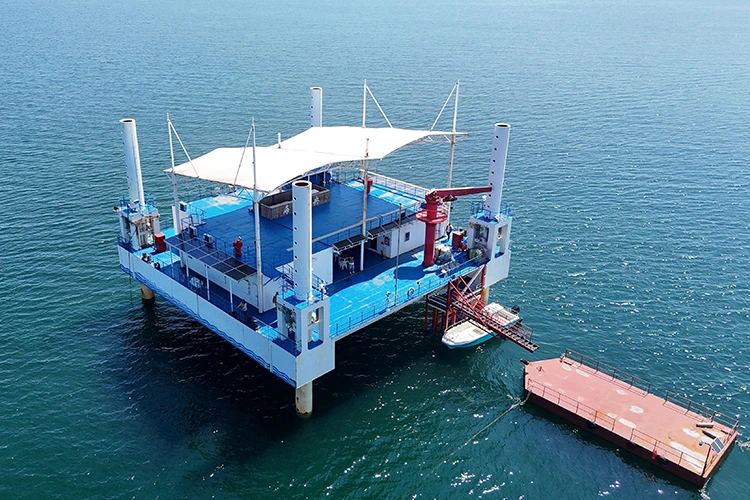
Table of Contents
- What Is a Jack Up Living Quarter Platform?
- Why Is It Important for Offshore Projects?
- How Is the Platform Designed for Offshore Living?
- Key Technical Specifications
- What Are the Main Operational Advantages?
- Where Can It Be Used?
- What Should Buyers Consider Before Ordering?
- Frequently Asked Questions
What Is a Jack Up Living Quarter Platform?
A Jack Up Living Quarter Platform is a self-elevating offshore platform designed to provide long-duration accommodation and support facilities for personnel working at sea. Unlike a conventional floating accommodation vessel, a jack-up configuration uses spud legs to raise the main platform above the water surface after positioning at the project site.
This configuration creates a dedicated elevated living environment that can incorporate bedrooms, dining facilities, offices, recreation areas, medical rooms, emergency shelters, utility systems, and equipment spaces. According to the product specifications provided by HAIDING SHIPYARD, its platform is configured for 3–100 m water depths, with customizable spud-leg lengths of 20–100 m and accommodation for up to 100 personnel.
The platform is particularly suitable where offshore personnel need to remain close to an operational site without relying entirely on daily transportation or frequent supply-ship movements.
Why Is It Important for Offshore Projects?
Offshore projects often face limited space, changing weather conditions, long transportation distances, and complicated logistics. Accommodation therefore becomes part of the overall project infrastructure rather than simply a place for workers to sleep.
A well-designed living quarter platform can centralize several support functions:
- Accommodation: Configurable single and double rooms for long-term personnel residence.
- Catering: Dining and food-storage facilities for offshore crews.
- Operations: Offices and meeting rooms for daily project coordination.
- Medical support: Dedicated treatment and emergency-response areas.
- Emergency protection: Emergency shelter, fire protection, backup power, and monitoring systems.
- Utilities: Freshwater storage, power generation, air conditioning, and purification systems.
By combining these functions in a single engineered platform, project operators can create a more organized offshore support base for drilling, construction, maintenance, installation, or emergency activities.
How Is the Platform Designed for Offshore Living?
Modular Accommodation
The living area can be arranged across multiple levels. The HAIDING SHIPYARD configuration uses a three-to-four-floor modular living cabin with approximately 1,200–1,500 m² of total area. The accommodation arrangement can include around 50 rooms, while common areas can include a canteen, offices, meeting rooms, gym, reading room, and audio-visual space.
Controlled Indoor Environment
Long-term offshore residence requires attention to temperature, humidity, ventilation, and air quality. The platform incorporates central air conditioning and air purification systems. The specified indoor temperature range is approximately 22–26°C, with humidity control of 40–60%, supporting a more consistent indoor environment despite changing marine conditions.
Integrated Emergency Support
Offshore accommodation must also support emergency response. The platform design includes a medical cabin, emergency shelter, fire protection equipment, backup generation, monitoring systems, and manual emergency lifting provisions. These systems can be integrated according to the operational and classification requirements of the project.
Spud Leg Adaptability
The self-elevating structure uses sectional truss-type spud legs. The specified leg diameter is approximately 2.5–3.0 m, while the leg length can be customized between 20 and 100 m. This allows the platform configuration to be adapted to different water-depth requirements and seabed conditions.
What Are the Key Technical Specifications?
Technical parameters are essential when evaluating an offshore accommodation platform because water depth, payload, dimensions, leg configuration, power supply, and safety systems directly influence project suitability.
| Parameter | Specification | Project Significance |
|---|---|---|
| Applicable Water Depth | 3–100 m | Supports different offshore operating environments |
| Platform Length | 50–70 m | Provides space for accommodation and support modules |
| Platform Width | 20–25 m | Supports multi-functional deck planning |
| Spud Legs | 3 truss-type legs | Provides self-elevating capability |
| Spud Leg Length | 20–100 m | Adaptable to project water depth |
| Lifting Speed | 0.3–0.5 m/min | Supports controlled elevation operations |
| Total Platform Load | Up to 3,000 tons | Allows accommodation, equipment, supplies, and utilities |
| Accommodation Capacity | Up to 100 persons | Suitable for medium-sized offshore crews |
| Freshwater Storage | 200 m³ | Supports extended offshore operation |
| Power Generation | 2 × 500 kW diesel generators | Provides primary and standby generation |
| Solar Assistance | 100 kW photovoltaic system | Provides auxiliary renewable power |
| Leveling Accuracy | ±0.1° | Helps maintain a stable living environment |
| Platform Material | CCSB marine steel plate | Designed for marine structural applications |
These figures represent the referenced platform configuration. Actual engineering parameters should be confirmed according to project water depth, seabed conditions, classification requirements, accommodation requirements, and applicable offshore regulations.
What Are the Main Operational Advantages?
1. Stable Elevated Accommodation
After positioning and elevating, the platform provides a dedicated living structure above the water. This configuration separates the accommodation area from direct contact with the sea surface and creates a stable base for personnel-support facilities.
2. Reduced Dependence on External Logistics
Freshwater storage, cold storage, backup generation, and integrated living facilities can extend the interval between external supply operations. This is particularly useful for projects where transportation to and from shore is time-consuming or weather-dependent.
3. Modular Transportation and Assembly
The platform can be divided into several transportable sections. The referenced configuration consists of approximately five to seven major sections, allowing components to be transported by suitable barges or semi-submersible vessels and assembled at the project location.
4. Easier Maintenance of Key Systems
Modular equipment arrangements can simplify the replacement of selected systems such as generators, freshwater treatment equipment, and air-conditioning components. This approach can reduce the time required to isolate and replace individual equipment modules.
5. Multi-Function Offshore Support
Instead of using separate facilities for accommodation, offices, medical support, catering, and emergency response, these functions can be integrated into one platform layout. This is valuable when deck space and offshore logistics are limited.
Where Can It Be Used?
A Jack Up Living Quarter Platform can be configured for different offshore projects where personnel require extended on-site accommodation and support.
- Offshore oil and gas: Provides living, catering, office, and emergency support for drilling and production personnel.
- Offshore wind: Supports installation, inspection, maintenance, and construction teams working around offshore wind projects.
- Deep-sea engineering: Provides accommodation for marine construction and subsea engineering crews.
- Pipeline repair: Creates a temporary offshore base close to underwater pipeline maintenance activities.
- Ship salvage: Provides temporary accommodation and utility support for emergency salvage teams.
- Marine emergency response: Can be configured for rapid deployment where temporary personnel accommodation is required.
For example, the referenced HAIDING SHIPYARD configuration is designed to support long-term personnel residence ranging from approximately 30 to 180 days, depending on the project arrangement and operating conditions.
What Should Buyers Consider Before Ordering?
Selecting an offshore living platform requires more than comparing accommodation capacity. Buyers should provide the manufacturer with detailed project information so that structural and utility systems can be properly engineered.
- Water depth: Confirm the minimum and maximum operating water depth and required spud-leg length.
- Seabed conditions: Provide available geotechnical data to determine suitable spud-can and foundation arrangements.
- Personnel capacity: Define the normal crew size, peak occupancy, room configuration, and operating period.
- Environmental conditions: Consider wind, waves, temperature, corrosion exposure, and other site-specific conditions.
- Deck loading: Calculate accommodation, equipment, freshwater, food, fuel, and operational payload requirements.
- Utility demand: Determine electricity, freshwater, wastewater, HVAC, communication, and emergency-power requirements.
- Classification: Confirm the applicable marine classification and project-specific statutory requirements before final engineering.
- Transportation: Plan section dimensions and lifting weights around the available transport and installation equipment.
A clear technical specification at the beginning of the procurement process helps the manufacturer develop a platform that fits the actual offshore operating environment rather than relying on a generic configuration.
Frequently Asked Questions About Jack Up Living Quarter Platforms
1. How many people can a Jack Up Living Quarter Platform accommodate?
The referenced HAIDING SHIPYARD configuration has a rated accommodation capacity of up to 100 people. The actual number can be adjusted according to room layout, dining capacity, utility requirements, safety arrangements, and project specifications.
2. What water depth can the platform operate in?
The referenced design is intended for approximately 3–100 m of marine water depth, with spud-leg lengths customizable from 20–100 m. Final suitability depends on seabed conditions and project-specific engineering analysis.
3. What facilities can be included?
Typical facilities include dormitories, bathrooms, dining areas, food storage, offices, meeting rooms, recreation areas, medical rooms, emergency shelters, HVAC systems, freshwater storage, power generation, fire protection, and monitoring systems.
4. Can the living quarters be customized?
Yes. Modular construction allows accommodation layouts, room numbers, office areas, utility systems, power capacity, emergency facilities, and other modules to be configured around the project's operational requirements.
5. How is the platform transported?
The referenced platform can be divided into several sections for transportation. Depending on the project location and section dimensions, suitable ocean-going barges or semi-submersible vessels can be considered for transportation and offshore installation.
6. Is the platform suitable for long-term offshore residence?
The platform is specifically configured for extended personnel residence. Its accommodation, climate control, catering, freshwater, power, medical, and emergency-support systems are intended to support offshore operations lasting weeks or months, subject to the final project configuration.
Conclusion
A properly engineered Jack Up Living Quarter Platform can serve as a centralized offshore base for accommodation, operations, medical support, catering, utilities, and emergency response. With adaptable spud legs, modular construction, up to 3,000 tons of platform load capacity, accommodation for up to 100 personnel, and integrated utility systems, the HAIDING SHIPYARD solution can be configured for oil and gas, offshore wind, deep-sea engineering, salvage, pipeline repair, and other marine projects. If you are planning an offshore accommodation project and need a platform matched to your water depth, crew capacity, payload, transportation method, and operating environment, contact us to discuss your technical requirements and obtain a customized Jack Up Living Quarter Platform solution.