How Does a Bucket Wheel Dredger Work
Abstract
A Bucket Wheel Dredger is one of the most efficient and powerful machines used for continuous excavation in mining, river dredging, and land reclamation projects. However, many buyers and project managers struggle to understand how it operates, what advantages it offers, and how to select the right model for their needs. This article provides a comprehensive breakdown of its working principles, key components, benefits, operational challenges, and practical selection guidance to help decision-makers maximize project efficiency and return on investment.
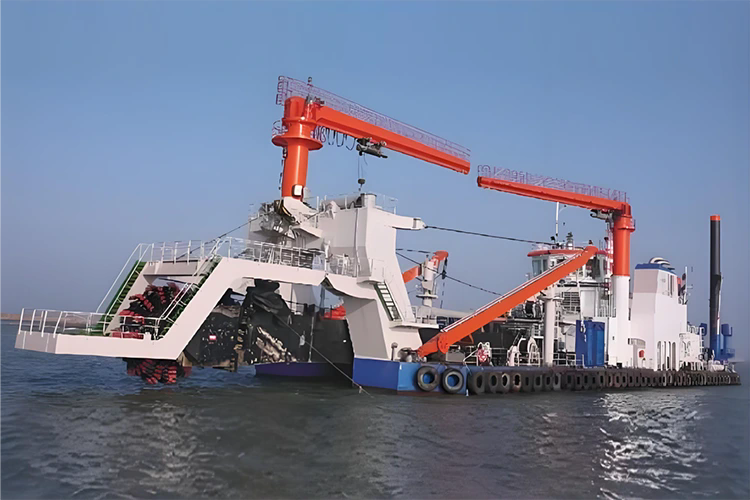
Table of Contents
1. What Is a Bucket Wheel Dredger 2. How Does It Work 3. Key Components Explained 4. Advantages for Industrial Projects 5. Common Operational Challenges 6. How to Choose the Right Dredger 7. Comparison with Other Dredging Equipment 8. FAQ1. What Is a Bucket Wheel Dredger
A Bucket Wheel Dredger is a heavy-duty excavation machine designed for continuous digging, typically used in large-scale mining operations, sediment removal, and hydraulic engineering projects. Unlike traditional dredgers that rely on suction or cutter heads, this equipment uses a rotating wheel fitted with multiple buckets to scoop material continuously.
It is particularly suitable for handling compacted soil, clay, sand, and even soft rock formations in high-capacity operations.
2. How Does It Work
The working principle of a Bucket Wheel Dredger is based on continuous mechanical excavation. The bucket wheel rotates slowly while each bucket cuts into the material and lifts it upward. The excavated material is then transferred through an internal conveyor system and discharged to barges or pipelines.
The process can be summarized as follows:
- Rotation of the bucket wheel
- Cutting and scooping of material
- Lifting through bucket motion
- Transfer to conveyor system
- Discharge to transport units
This continuous cycle ensures high productivity and minimal downtime, making it ideal for large-scale operations.
3. Key Components Explained
Understanding the main components is essential when evaluating equipment performance and durability.
| Component | Function |
|---|---|
| Bucket Wheel | Performs excavation and material lifting |
| Drive System | Provides rotational power to the wheel |
| Conveyor Belt | Transfers excavated material |
| Hull Structure | Supports floating operation |
| Control System | Ensures precise operation and monitoring |
High-quality manufacturing of these components significantly affects performance, reliability, and maintenance costs.
4. Advantages for Industrial Projects
One of the main reasons companies invest in Bucket Wheel Dredgers is their ability to deliver consistent output under demanding conditions.
- Continuous operation with minimal interruption
- High excavation capacity
- Efficient energy consumption compared to cyclic systems
- Suitable for various soil conditions
- Reduced labor requirements
Companies such as Shandong Haiding Shipbuilding Co., Ltd. focus on optimizing these advantages by improving structural strength and system integration.
5. Common Operational Challenges
Despite its strengths, several issues may arise during operation if not properly managed.
- Wear and tear on bucket edges
- High initial investment cost
- Complex maintenance requirements
- Limited flexibility in confined spaces
Preventive maintenance and proper operator training are essential to ensure long-term performance and cost efficiency.
6. How to Choose the Right Dredger
Selecting the right Bucket Wheel Dredger requires a clear understanding of project requirements and environmental conditions.
Key factors to consider:
- Material type and hardness
- Required dredging depth
- Production capacity
- Site accessibility
- Budget constraints
Working with experienced manufacturers like Shandong Haiding Shipbuilding Co., Ltd. can help tailor solutions based on specific operational needs.
7. Comparison with Other Dredging Equipment
| Type | Best Use Case | Efficiency |
|---|---|---|
| Bucket Wheel Dredger | Continuous large-scale excavation | Very High |
| Cutter Suction Dredger | Loose material dredging | High |
| Grab Dredger | Precision dredging | Moderate |
The bucket wheel system stands out in projects requiring uninterrupted, high-volume material removal.
8. FAQ
Q1: What materials can a Bucket Wheel Dredger handle?
It can handle sand, clay, silt, and moderately compacted materials, depending on design specifications.
Q2: Is it suitable for small projects?
Generally, it is more cost-effective for medium to large-scale operations due to its capacity.
Q3: How often does maintenance need to be performed?
Routine inspections should be conducted regularly, with major maintenance scheduled based on operating hours.
Q4: Can it operate in harsh environments?
Yes, when properly designed and maintained, it performs well in challenging conditions.
Conclusion
A Bucket Wheel Dredger is a powerful solution for continuous excavation and large-scale dredging projects. Understanding its working mechanism, benefits, and limitations allows operators and investors to make informed decisions and optimize performance.
If you are planning a dredging project and need reliable, high-performance equipment, Shandong Haiding Shipbuilding Co., Ltd. offers customized solutions tailored to your operational requirements. Contact us today to explore how we can support your project success.
Related News
- How Can a Controllable Pitch Propeller Tug Improve Towing Efficiency and Port Maneuverability
- How Can a Jack Up Living Quarter Platform Improve Safety and Efficiency in Offshore Operations
- How Can a Rapidly Emplaced Bridge Transform Emergency Water-Crossing and Infrastructure Recovery
- How Can a Jack Up Wind Farm Installation Platform Transform Offshore Wind Turbine Installation
- How Can Modular Pontoons Transform Modern Marine Construction and Floating Platform Projects
- How Does an Ocean-Going Tug Support Demanding Deep-Sea Operations?
Leave me a message