How Does a Backhoe Dredger Work and Why It Matters for Efficient Dredging?
Abstract
A backhoe dredger is a powerful piece of dredging equipment widely used in ports, rivers, lakes, and coastal engineering projects. It combines excavation precision with marine adaptability, making it suitable for heavy-duty dredging tasks where accuracy, depth control, and material handling are critical. This article explains how a backhoe dredger works, its key components, operational advantages, application scenarios, and common challenges customers face when selecting dredging equipment. It also provides practical insights to help decision-makers choose the right dredging solution for long-term efficiency and cost control.
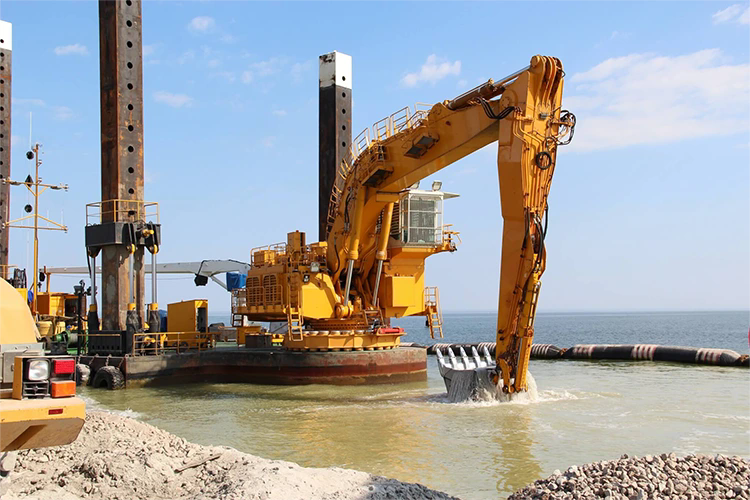
Table of Contents
- 1. Overview of Backhoe Dredger
- 2. Main Structure and Components
- 3. Working Principle Explained
- 4. Key Advantages in Real Projects
- 5. Typical Application Scenarios
- 6. How to Choose the Right Backhoe Dredger
- 7. Comparison Table: Backhoe vs Other Dredgers
- 8. Common Challenges and Solutions
- 9. FAQ
- 10. Contact Information
1. Overview of Backhoe Dredger
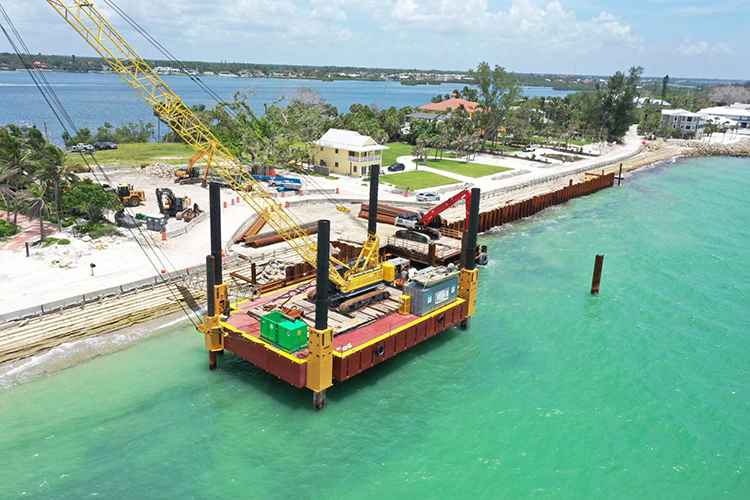
A backhoe dredger is a floating or pontoon-mounted excavator system designed for underwater excavation. It operates similarly to a land-based backhoe excavator but is adapted for marine environments. Unlike suction dredgers that rely on pumping sediments, a backhoe dredger physically digs and removes material such as clay, gravel, compacted soil, and even rock fragments.
This makes it especially valuable in projects requiring high precision, such as harbor deepening, trenching for pipelines, and dock construction.
2. Main Structure and Components
The performance of a backhoe dredger depends on its structural design and hydraulic system. Below are its main components:
- Pontoon Platform: Provides stability and buoyancy.
- Excavator Arm: Performs digging operations underwater.
- Hydraulic System: Powers movement and digging force.
- Buckets: Interchangeable tools for different soil types.
- Positioning System: Ensures accurate dredging alignment.
Each component plays a crucial role in ensuring efficiency, precision, and operational safety in challenging underwater environments.
3. Working Principle Explained
The backhoe dredger operates through a simple yet powerful mechanical principle. The operator controls the hydraulic arm, which extends downward into the seabed or riverbed. The bucket digs into sediment layers and lifts material to the surface.
Once the bucket is filled, it is rotated and emptied into a transport barge or designated disposal area. This cycle repeats continuously until the required depth or dredging volume is achieved.
The precision of hydraulic control allows operators to manage depth and angle accurately, reducing unnecessary over-dredging and minimizing environmental disturbance.
4. Key Advantages in Real Projects
Backhoe dredgers offer several operational advantages that make them preferred in complex dredging environments:
- High precision excavation capability
- Effective in hard and compact soils
- Suitable for confined or shallow waters
- Strong adaptability to different project types
- Lower sediment dispersion compared to suction dredgers
These advantages make them particularly useful in infrastructure projects where accuracy is more important than large-scale material transport.
5. Typical Application Scenarios
Backhoe dredgers are widely used in multiple industries, including:
- Port and harbor deepening
- River and canal maintenance
- Pipeline trenching and installation
- Land reclamation projects
- Environmental dredging in contaminated zones
Their ability to handle tough materials makes them suitable for both construction and environmental engineering projects.
6. How to Choose the Right Backhoe Dredger
Selecting the right dredger requires careful evaluation of project requirements. Key factors include:
- Water depth: Determines arm length and pontoon size.
- Soil type: Hard clay or rock requires stronger buckets.
- Project scale: Larger projects may require higher capacity systems.
- Mobility needs: Some projects require frequent relocation.
- Operational environment: Wave conditions and water flow impact stability.
Proper selection directly affects efficiency, operational cost, and project timeline.
7. Comparison Table: Backhoe vs Other Dredgers
| Feature | Backhoe Dredger | Trailing Suction Dredger | Cutter Suction Dredger |
|---|---|---|---|
| Excavation Method | Mechanical digging | Suction | Cutter + suction |
| Soil Type | Hard/compact soils | Soft sediments | Mixed soils |
| Precision | Very high | Moderate | High |
| Best Use | Confined areas | Large-scale dredging | Channel construction |
8. Common Challenges and Solutions
While backhoe dredgers are highly efficient, operators may face several challenges:
- Stability in rough waters: Requires reinforced pontoons.
- Equipment wear: Regular maintenance of buckets and hydraulic systems is necessary.
- Operational skill: Requires trained operators for precision work.
These challenges can be effectively managed through proper equipment selection, preventive maintenance, and operator training.
9. FAQ
Q1: What materials can a backhoe dredger handle?
It can handle clay, sand, gravel, compact soil, and even fragmented rock.
Q2: Is it suitable for deep water projects?
It is more suitable for shallow to medium depth operations due to arm reach limitations.
Q3: How does it differ from suction dredgers?
Unlike suction systems, it uses mechanical excavation, offering higher precision.
Q4: How often does maintenance need to be done?
Regular inspections are recommended after each project cycle or intensive use period.
10. Contact Information
Backhoe dredgers play a vital role in modern marine and inland water engineering. Choosing a reliable manufacturer ensures long-term performance, safety, and operational efficiency.
Shandong Haiding Shipbuilding Co., Ltd. specializes in designing and manufacturing high-performance dredging equipment tailored to diverse project needs worldwide. With advanced engineering capabilities and practical field experience, the company delivers solutions that help clients achieve efficient and stable dredging operations.
If you are planning a dredging project or need customized equipment solutions, contact us today to discuss your requirements and receive professional support from our technical team.
Related News
- How Can a Controllable Pitch Propeller Tug Improve Towing Efficiency and Port Maneuverability
- How Can a Jack Up Living Quarter Platform Improve Safety and Efficiency in Offshore Operations
- How Can a Rapidly Emplaced Bridge Transform Emergency Water-Crossing and Infrastructure Recovery
- How Can a Jack Up Wind Farm Installation Platform Transform Offshore Wind Turbine Installation
- How Can Modular Pontoons Transform Modern Marine Construction and Floating Platform Projects
- How Does an Ocean-Going Tug Support Demanding Deep-Sea Operations?
Leave me a message